Why Luxury Travellers Skip Heathrow and Fly Private Instead
You land at Heathrow after an overnight flight, queue for border control behind hundreds of passengers, wait another 40 minutes for luggage, and then crawl through London traffic feeling worse than when you boarded.
That experience no longer fits the way affluent travellers move in 2026.
Ultra-high-net-worth individuals, founders, celebrities, family offices, and global executives increasingly see commercial aviation as operational friction rather than transportation. Time matters more. Privacy matters more. Energy preservation matters more.
Private aviation solves those problems.
And that explains why more elite travellers now bypass Heathrow entirely in favour of private terminals like Farnborough, London Luton, and Biggin Hill.
The shift is no longer niche either. According to industry data from WingX and EBAA, European business aviation activity remained above pre-2019 levels entering 2026, with London continuing to rank among the busiest private aviation markets globally.
You are not simply buying a seat anymore.
You are buying control.
Why Heathrow No Longer Feels Like Luxury
Commercial first class still offers comfort.
It does not offer freedom.
That distinction matters once your schedule becomes genuinely valuable.
A delayed departure may cost:
A board meeting
A closing dinner
A family event
A speaking engagement
A recovery day after long-haul travel
For high-performing travellers, airport inefficiency creates downstream consequences that are far more expensive than the ticket itself.
Heathrow processed over 83 million passengers across 2025 according to airport traffic reports. That volume creates unavoidable congestion.
You feel it everywhere:
Security lines
Boarding gates
Immigration queues
Baggage delays
Lounge overcrowding
Taxi bottlenecks
Private aviation removes almost all of that friction.
Instead of arriving three hours early, you may arrive 20 minutes before departure and walk directly from your car to the aircraft.
Private Jet Charter vs. Commercial: The Real Difference
Most comparisons between commercial and private aviation focus on luxury.
That misses the point.
The real advantage is operational efficiency.
Private aviation changes how your entire journey functions.
What You Gain Flying Private
1. Direct-to-Plane Access
No gate crowds.
No boarding groups.
No terminal chaos.
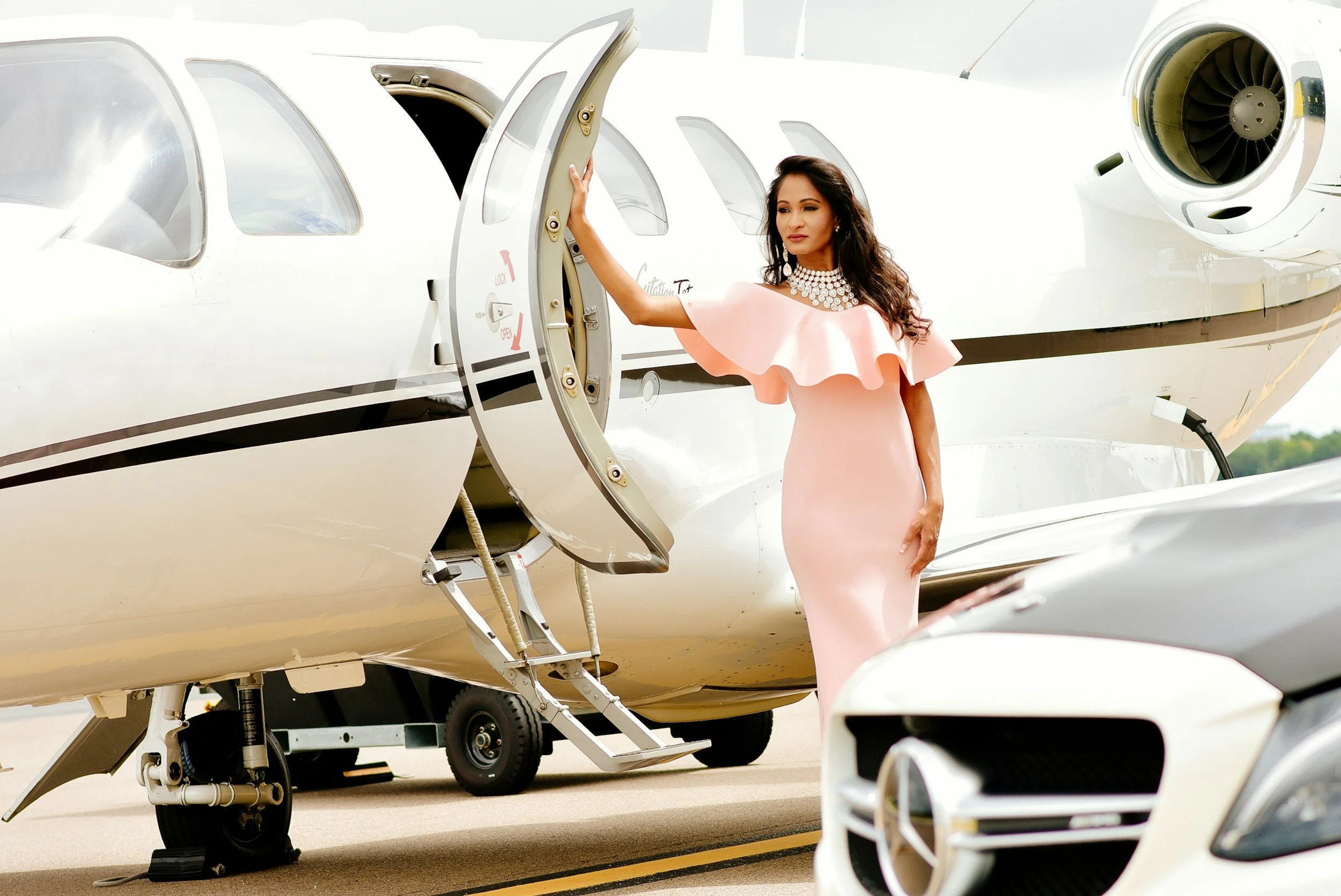
Your vehicle pulls directly beside the aircraft at many private terminals.
2. Flexible Scheduling
Commercial airlines dictate your itinerary.
Private aviation works around yours.
Departure times can often shift last minute depending on operational conditions.
That flexibility becomes extremely valuable for:
CEOs
Family offices
Private equity teams
Touring entertainers
Athletes
Diplomatic travellers
3. Access to Better Airports
Heathrow is not designed for discretion.
Private airports are.
Many elite travellers now prefer:
Farnborough Airport
London Luton private jet FBOs
London Biggin Hill
These airports prioritise business aviation rather than commercial throughput.
That creates:
Faster arrivals
Faster departures
Better privacy
Lower stress
More predictable logistics
Privacy Became More Valuable After 2020
Luxury travellers increasingly want invisibility rather than attention.
Quiet luxury now dominates elite travel behaviour.
You see it in:
Private villas replacing luxury hotels
Yacht charters replacing crowded resorts
Private terminals replacing major airports
Commercial travel exposes you to constant interruption.
Private aviation protects your environment.
That matters for:
Celebrities
Family offices
Public company executives
Royal families
Ultra-visible founders
Inside a private cabin, you can:
Hold confidential meetings
Sleep properly
Work uninterrupted
Travel with security teams
Avoid public scrutiny entirely
For many high-profile individuals, discretion alone justifies the cost.
Business Efficiency Matters More Than Luxury
The strongest private aviation clients rarely talk about champagne.
They talk about time compression.
One of the biggest advantages of private aviation is how many inefficiencies disappear simultaneously.
A typical executive commercial journey often includes:
Early airport arrival
Security waiting
Boarding delays
Taxi delays
Baggage collection
Immigration congestion
Ground transfer uncertainty
Private aviation compresses those steps dramatically.
That operational efficiency explains why private jet demand among corporate travellers remained strong throughout 2025 and early 2026 despite economic uncertainty.
For many executives, the aircraft effectively becomes:
A mobile office
A secure meeting room
A recovery environment
A strategic productivity tool
You are preserving energy, not just saving hours.
That distinction becomes increasingly important for time-poor global professionals.
Wellness and Intentional Restoration Are Driving Demand
A growing percentage of affluent travellers now prioritise recovery quality over visible luxury.
That trend accelerated sharply after the pandemic years.
Commercial aviation creates sensory overload:
Noise
Crowds
Delays
Bright terminals
Interrupted sleep
Constant stimulation
Private aviation offers low-density travel instead.
Cabins become controlled environments.
You can:
Sleep without interruption
Eat on your own schedule
Reduce stress exposure
Travel with pets comfortably
Avoid crowded terminals entirely
Pet-friendly private aviation has become especially important among family travellers.
Meanwhile, gourmet in-flight catering has evolved significantly in 2026.
Many operators now coordinate directly with Michelin-level restaurants, nutritionists, and wellness-focused chefs before departure.
The emphasis shifted from extravagance to intentional comfort.
Why Farnborough, Biggin Hill, and Luton Are Winning
Heathrow was built for scale.
Private aviation airports were built for precision.
That difference shapes the entire experience.
Farnborough Airport
Farnborough remains one of Europe’s most prestigious private aviation hubs.
You get:
Dedicated business aviation infrastructure
Minimal congestion
Exceptional privacy
Fast London helicopter connections
Elite concierge services
London Luton Private Jet FBO
Luton handles a significant volume of private aviation traffic while offering excellent operational flexibility.
Many travellers choose it because:
Access is efficient
Slots are flexible
Ground handling is strong
Central London transfers remain straightforward
London Biggin Hill
Biggin Hill appeals strongly to privacy-focused travellers.
The environment feels discreet rather than corporate.
That makes it especially attractive for:
Entertainment figures
Diplomatic travellers
Security-conscious clients
The Rise of Hyper-Personalised Travel
Modern luxury travellers increasingly expect travel to adapt around their lifestyle.
Private aviation supports that expectation better than commercial airlines ever could.
You can customise:
Departure timing
Catering
Aircraft type
Cabin layout
Pet arrangements
Ground transportation
Security coordination
Multi-city routing
That level of bespoke planning matters particularly for:
Family offices
Multi-generational travel
Corporate delegations
Luxury holidays
Last-minute business movement
You are not navigating someone else’s system anymore.
The system adapts to you.
Is Flying Private Worth It in 2026?
That depends on how you value:
Time
Privacy
Flexibility
Energy
Security
Convenience
For occasional leisure travellers, first class may still work perfectly well.
For people operating at high levels across multiple countries and compressed schedules, private aviation increasingly becomes rational rather than extravagant.
Especially when:
Multiple passengers travel together
Time sensitivity matters
Privacy matters
Productivity matters
Recovery matters
Final Thoughts
Luxury travellers are not skipping Heathrow because they dislike airports.
They are skipping Heathrow because commercial aviation no longer aligns with how high-value people want to move through the world.
Private aviation offers:
Greater control
Better privacy
Lower friction
Faster movement
Improved wellness
Hyper-personalised service
Most importantly, it protects your time and energy.
And in 2026 and onwards, those may be the two most valuable luxuries left.
If you want bespoke private aviation solutions tailored around your schedule, lifestyle, and destination requirements, visit Private Jet Journeys for discreet luxury travel planning and private jet charter services.
