Blog
Gulfstream G650ER vs Global 7500: Which Would I Charter for London–Maldives, Dubai or Los Angeles?
If you had to pick between Gulfstream G650ER vs Global 7500, which one would you pick and why? One of the most challenging decisions in ultra-long-range travel isn't range at all — both jets fly further than you'll ever need on a single leg. However, if you actually look at what happens once passengers, bags, and real runways enter the picture, the "right" answer changes with every route you fly.
You're not choosing between a good jet and a bad one here. You're choosing between two flagship aircraft that solve slightly different problems, and getting it wrong just means paying for comfort or range you didn't need. Let's settle it, route by route.
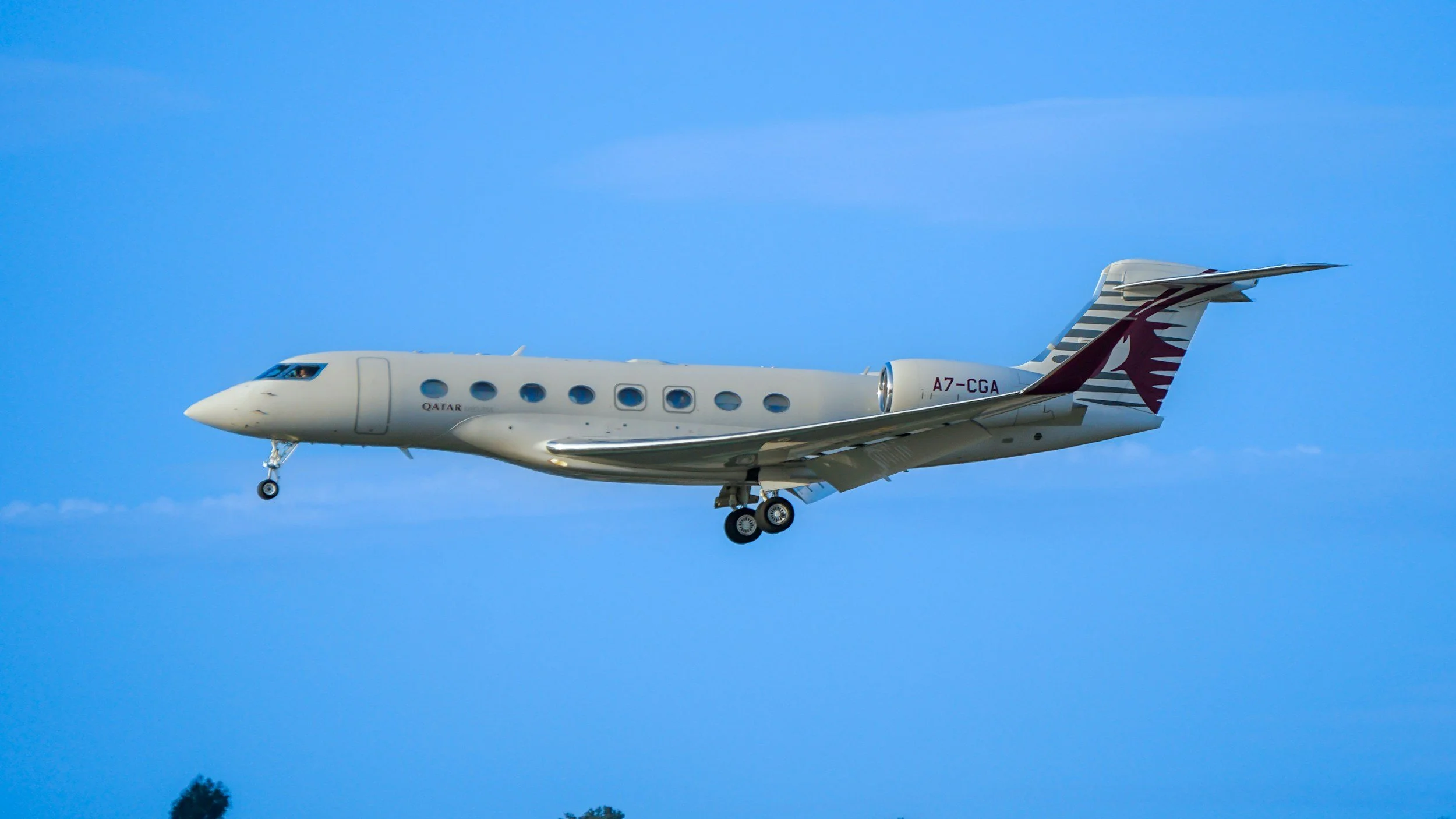
The Two Aircraft in Brief
Both of these jets sit at the very top of the private charter market, and both are genuinely rare. Bombardier has built roughly 200 Global 7500s since the aircraft entered service in December 2018, while Gulfstream has delivered close to 600 G650-family aircraft since 2008, a run that officially ended when the final G650 rolled off the line in February 2025 to make way for the newer G800.
Here's the quick side-by-side, before we get into the routes that actually matter to you.
| Metric | Gulfstream G650ER | Bombardier Global 7500 |
|---|---|---|
| Max Range | 7,500 nm | 7,700 nm |
| Cabin Zones | 3 to 4 zones | 4 distinct zones |
| Max Passengers | Up to 19 | Up to 19 |
| Baggage Capacity | ~195 cu ft | ~195 cu ft |
| Takeoff Distance | ~6,299 ft | ~5,760 ft |
| Cabin Altitude | ~4,100 ft at cruise | ~4,500 ft at cruise |
| Est. Charter Cost | $16,000–$18,000/hr | $17,500–$20,000/hr |
You'll notice the numbers are close. That's exactly why the decision has to be made on mission, not spec sheet.
Range Reality: What the Brochure Doesn't Tell You
Both aircraft advertise numbers north of 7,000 nautical miles, and both easily complete all three of your requested routes non-stop. But here's the catch nobody puts in bold on a broker's website: range shrinks the moment you add passengers, bags, and catering.
This is called the payload-range trade-off, and it simply means an aircraft's true range depends on how heavy it is, not just how much fuel it can carry. A jet quoted at 7,500 nautical miles rarely flies that far with a full cabin and full baggage hold — the real figure sits lower, and that gap is exactly where good route planning earns its keep.
For your three routes, though, you don't need to worry. London–Maldives, London–Dubai, and London–Los Angeles all sit comfortably inside the realistic range envelope for both aircraft, even with a full passenger load.
Mission One: London to the Maldives
This is the big one — roughly 4,952 nautical miles, and about 10 hours in the air heading east toward Velana International Airport (MLE).
Neither jet breaks a sweat on distance here. Where they genuinely differ is on the ground: Velana International sits on a small coral island with tropical heat working against takeoff performance, and the Global 7500's transonic wing design handles hot-and-heavy departures with a shorter takeoff roll than the G650ER needs.
That single detail — a flexible, high-lift wing built specifically for shorter and hotter runways — is the same reason Bombardier's own engineering team has pointed to improved takeoff performance as one of the Global 7500's headline achievements over its predecessor.
The verdict for this route: if you're travelling as a larger family group and want a genuinely separate kids' zone away from an adult dining area, charter the Global 7500. Four distinct zones on a 10-hour flight is the difference between a peaceful arrival and a cabin full of overtired children by hour six.
Mission Two: London to Dubai
At roughly 2,972 nautical miles and 6.5 to 7 hours, this route barely stretches either aircraft's legs. You're not testing range here — you're testing value.
Dubai International (DXB) and Al Maktoum (DWC) both run some of the longest, best-equipped runways in the world, so neither jet faces any airfield limitations on arrival or departure. That removes runway performance from the decision entirely, which means comfort and cost carry all the weight.
The verdict for this route: charter the Gulfstream G650ER. You don't need a four-zone layout for a 6.5-hour hop, the G650ER's 16 panoramic oval windows flood the cabin with daylight on a route usually flown in daytime hours, and you'll typically save somewhere in the region of $10,000 to $15,000 on the full round-trip bill compared with booking the Global 7500.
Mission Three: London to Los Angeles
This is the toughest test of the three — around 4,741 nautical miles, and roughly 11 hours westbound fighting Atlantic headwinds the whole way.
Van Nuys Airport (VNY) is the preferred private aviation hub for Los Angeles among HNW travellers, and both aircraft operate there regularly despite the airport's noise restrictions and tight ramp space. Range isn't the constraint on this route either — comfort is, because headwinds mean more hours in the air fighting jet lag, not less.
This is where the two jets make genuinely different arguments for themselves:
The G650ER's case: a lower cabin altitude around 4,100 feet at cruise, paired with a 100% fresh air replenishment system that cycles new air into the cabin roughly every two minutes rather than recirculating it.
The Global 7500's case: Nuage seats with a deep, near-weightless tilt mechanism, plus a permanent private bedroom suite at the rear of the aircraft — something the G650ER's more flexible layout doesn't offer in quite the same form.
The verdict for this route: charter the Global 7500 if you're planning to land and go straight into a meeting. Landing after 11 hours having actually slept on a real, permanent bed — with the option of a stand-up shower before you step off the aircraft — changes the entire experience of a westbound transatlantic flight.
Why the Global 7500 Wins on Cabin Real Estate
The Global 7500 remains the only purpose-built four-zone business jet on the market, and that engineering choice shows up in three places you'll actually notice.
Zoning: a genuinely separate living room, dining or conference area, entertainment space, and private suite, rather than one long cabin you reconfigure as needed
The master suite: a true back-of-aircraft bedroom with a closing door, something few ultra-long-range jets offer at all
Nuage seating: an articulating seat design that tilts and flexes in a way conventional business jet seats don't, which matters more the longer you're sitting in it
Why the G650ER Wins on the Air You Breathe
Gulfstream's engineering philosophy runs in the opposite direction — instead of maximising cabin zoning, it maximises physiological comfort. The G650ER's cabin altitude sits around 4,100 feet at cruise, among the lowest in its class, which your body genuinely feels as less fatigue on arrival, particularly across multiple time zones.
Combine that with 16 of the largest oval windows in business aviation, and you get a cabin that feels brighter and less claustrophobic on long daytime sectors. This is precisely why frequent flyers of both aircraft describe the G650ER less as a luxury cabin and more as, in the words some pilots and brokers use, a genuine "time machine" — you land feeling like less time has actually passed.
Baggage: The Detail Brokers Skip
Golf clubs, ski bags, a full wardrobe for a two-week Maldives trip — this is where charterers get caught out on smaller aircraft, but not here. Both the G650ER and the Global 7500 offer roughly 195 cubic feet of baggage capacity, enough for around 16 full-size suitcases between passengers.
Both aircraft also allow in-flight baggage access, which matters more than it sounds on an 11-hour sector if you need a change of clothes, medication, or a laptop charger without waiting for landing.
What You'll Actually Pay
Here's where the gap between "brochure number" and "what shows up on your invoice" gets interesting. Industry-wide, private jet card rates averaged $11,273 an hour by the end of Q2 2025, up 2.9% year-over-year, and that's across the entire market — ultra-long-range flagship jets like these two sit well above that average.
Realistic hourly charter rates for the G650ER generally land between $17,000 and $19,750, while the Global 7500 typically runs between $18,500 and $20,000 an hour depending on routing, positioning, and how far in advance you book.
What most quotes leave out entirely:
Landing and handling fees at premium FBOs — expect these to be higher at Farnborough, DXB, and VNY than at secondary airports
Crew overnight allowances on any multi-day itinerary, since your crew doesn't fly back empty
Positioning legs, if the aircraft you've booked isn't already based near your departure point
De-icing and seasonal fees, particularly relevant on winter London departures
Empty leg availability on either jet is genuinely rare for these specific city pairs. Ultra-long-range aircraft don't fly nearly as often as midsize jets, so don't build your travel plans around finding a discounted empty leg on a London–Maldives or LA–Dubai route.
Which Would I Actually Charter?
Here's the honest, route-by-route answer, based on everything above.
| Route | Priority | Recommended Aircraft |
|---|---|---|
| London–Maldives | Runway performance, family zoning | Global 7500 |
| London–Dubai | Value, daylight cabin, cost saving | G650ER |
| London–Los Angeles | Sleep quality, jet lag recovery | Global 7500 |
Neither aircraft is "better" in isolation — that framing is exactly why so many comparison articles miss the point. The Global 7500 is your premium pick when cabin space and runway flexibility matter most, while the G650ER is your marginally more economical, remarkably consistent choice when the mission doesn't demand a four-zone cabin.
Frequently Asked Questions
Can the Gulfstream G650ER fly London to the Maldives non-stop?
Yes. At roughly 4,952 nautical miles, this route sits comfortably within the G650ER's real-world range even with a full passenger load and baggage.
Is the Global 7500 more comfortable than the G650ER for long flights?
It depends what you value. The Global 7500 wins on zoning and its permanent bedroom suite, while the G650ER wins on cabin altitude and natural light.
What is the hourly charter rate for a G650ER vs a Global 7500?
The G650ER typically runs $16,000–$18,000 an hour, while the Global 7500 usually runs slightly higher, around $17,500–$20,000 an hour.
Can either jet fly Los Angeles to Dubai non-stop with a full cabin?
Both aircraft are technically capable, though this route sits near the edge of both jets' realistic payload-range envelope and deserves route-specific planning before booking.
Which aircraft has a lower cabin altitude, the G650ER or Global 7500?
The G650ER, at around 4,100 feet at cruise versus the Global 7500's approximately 4,500 feet.
Does the Global 7500 have a shower and permanent bed?
Yes. Its rear private suite includes a true double bed and, on many configurations, a stand-up shower — a feature the G650ER's more flexible cabin doesn't replicate in the same form.
Ready to Book the Right Jet?
Choosing between Gulfstream G650ER vs Global 7500 isn't about which one wins on paper — it's about which one wins on your specific route, with your specific group. Get that match wrong, and you'll either overpay for zoning you don't need or under-deliver on the comfort a long sector demands.
Visit privatejetjourneys.com and let our team match the right aircraft to your route, whether that's a G650ER for a quick Dubai hop or a Global 7500 for the long haul to the Maldives or Los Angeles.