When Does It Make Sense to Choose a Private Jet Over First Class?
If you already fly first class, you’re accustomed to priority boarding, lie-flat seats, and premium service. So the question isn’t whether you can travel comfortably.
The real question is this:
At what point does first class stop being efficient for you?
Because when you operate at a high level — whether you’re leading a company, managing investments, or protecting your family’s privacy — travel isn’t about luxury. It’s about leverage.
Here’s when choosing a private jet over first class stops being indulgent… and starts being strategic.
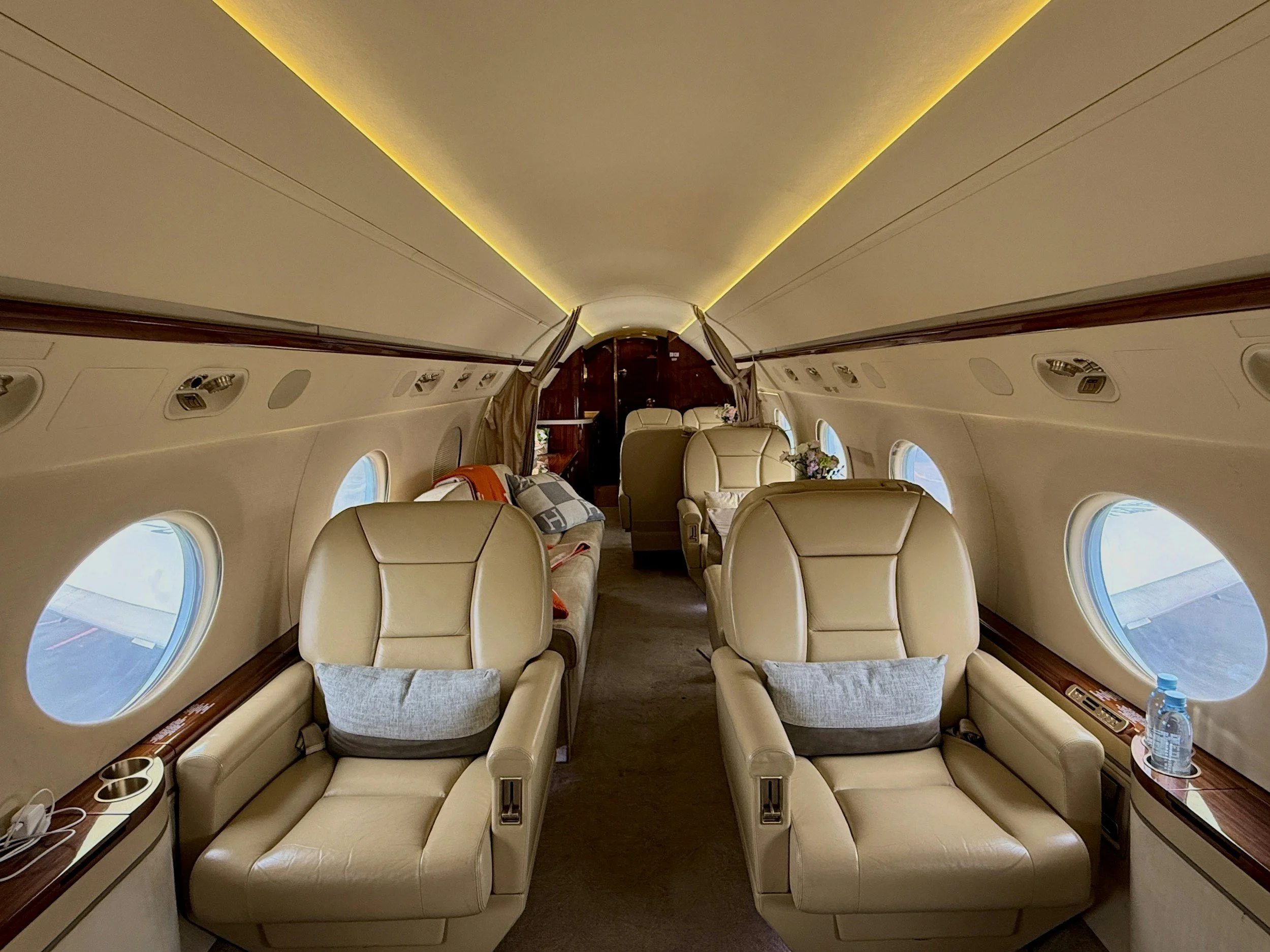
1. When Your Time Is Worth More Than the Ticket Price
You don’t measure value the way most travelers do.
You measure it in:
Deals closed
Meetings secured
Opportunities captured
Time preserved
With commercial first class, you still:
Arrive 60–90 minutes early
Navigate crowded terminals
Wait for boarding groups
Taxi in long queues
Risk delays outside your control
When you fly private, you:
Arrive 15–20 minutes before departure
Walk directly from car to aircraft
Depart on your schedule
Land closer to your final destination
That difference might save you 3–6 hours on a single trip.
If your time is valued in the thousands (or tens of thousands) per hour, the math shifts quickly.
It’s not about the ticket price.
It’s about what those hours are worth to you.
2. When You Need Control — Not Just Comfort
First class is premium within a public system.
Private aviation is control over the system.
With commercial travel, you’re working around:
Fixed departure times
Limited routes
Hub connections
Airline disruptions
Public exposure
When you charter a private jet, you decide:
Departure time
Airport selection
Passenger list
Cabin configuration
Catering
Return timing
Need to leave earlier? You can.
Meeting runs late? You adjust.
Want to add a second city the same day? You do.
If your schedule changes frequently — and it probably does — private aviation aligns with your calendar instead of forcing you to align with an airline’s.
3. When You’re Traveling With a Team
First class pricing works when you’re flying solo.
But when you’re traveling with:
3–8 executives
Family members
Advisors
Security
Assistants
The equation changes.
Instead of buying multiple premium tickets, you charter the entire aircraft.
Now your team:
Boards together
Works together
Lands together
Leaves together
There are no strangers. No scattered seating. No overhead-bin competition.
Your aircraft becomes a flying boardroom.
If the purpose of the trip is strategic collaboration, flying private keeps momentum intact from takeoff to landing.
4. When Privacy Isn’t Optional
If you’re discussing:
M&A activity
Investment strategy
Legal matters
Sensitive negotiations
First class still means you’re surrounded by strangers.
Even in a premium cabin, conversations can be overheard. Devices can be visible. Exposure is unavoidable.
When you fly private, the cabin is yours.
You control:
Who’s onboard
What’s discussed
The environment
The level of discretion
If your profile requires privacy — whether you’re a public figure, corporate executive, or simply value discretion — private aviation becomes risk management, not luxury.
For many high-net-worth individuals, privacy alone justifies the decision.
5. When You Need Access First Class Can’t Offer
Commercial airlines operate primarily between major hubs.
Private jets can access over 5,000 airports globally — including:
Regional business airports
Remote destinations
Private islands
Secondary European or U.S. airports
Mountain and resort locations
Instead of landing in a major city and driving 90 minutes, you land 10–20 minutes from your destination.
If you’re visiting multiple cities in one day, this becomes transformative.
Imagine:
Breakfast meeting in City A
Midday site visit in City B
Evening dinner in City C
Commercial travel makes that nearly impossible.
Private aviation makes it routine.
6. When Productivity Matters More Than the Perks
Yes, first class offers space.
But you’re still:
Limited in movement
Surrounded by unknown passengers
Dependent on in-flight Wi-Fi quality
Restricted in conversation
On a private jet, you can:
Conduct confidential meetings
Spread out documents
Take secure calls
Brainstorm with your team
Work uninterrupted
There’s no cabin noise beyond your own environment.
Your aircraft becomes an extension of your office — not a temporary seat assignment.
If you’re using travel time to move business forward, private aviation keeps that engine running.
7. When Your Schedule Can’t Tolerate Disruption
Commercial aviation operates within a complex network.
Weather, staffing shortages, congestion, maintenance — none of it is in your control.
Private aviation dramatically reduces:
Long delays
Missed connections
Rebooking chaos
Overnight disruptions
And if your plans shift, your aircraft adapts.
When your presence is critical — for a closing, a board meeting, or a personal matter — reliability becomes priceless.
Certainty has value. Especially at your level.
8. When First Class Is Enough
There are absolutely scenarios where first class makes sense:
You’re flying alone
It’s a nonstop major hub route
Your schedule is flexible
Privacy isn’t a concern
Time pressure is minimal
If none of the leverage factors apply, commercial first class can be perfectly sufficient.
But when even two or three of the earlier factors align — time sensitivity, privacy, team travel, flexibility — private aviation becomes a strategic decision.
The Real Question Isn’t Cost — It’s Leverage
Here’s a simple way to think about it:
First class gives you a premium seat.
Private aviation gives you:
Time leverage
Schedule control
Strategic privacy
Operational efficiency
Seamless continuity
It shifts you from being a passenger in someone else’s system to being in command of your own.
And at your level, control is often the ultimate luxury.
When It Makes Sense for You
You should strongly consider flying private when:
Your time is valued at a high hourly rate
You’re traveling with 3+ passengers
You need multi-city travel in a single day
Privacy or discretion is essential
Your schedule may change
You want direct access to secondary airports
If those apply to you, first class may no longer be the efficient choice — even if it appears cheaper on paper.
Exploring Private Aviation on Your Terms
Private aviation isn’t one-size-fits-all.
Depending on your travel profile, the right solution might be:
On-demand charter
Jet card programs
Fractional ownership
Full aircraft acquisition
The key is alignment — ensuring your aviation strategy reflects how you actually travel.
If you’re questioning whether first class still serves you at the highest level, it may be time to evaluate a more strategic alternative.
Because ultimately, the decision isn’t about comfort.
It’s about whether your travel is working for you — or quietly costing you more than you realize.
If you are interested in complimentary advice, you can contact James https://jamesnightingall.com/contact
