The Real Difference Between Private Jets and First Class Flights
You can spend £15,000 on an international first class seat and still lose hours in queues, delays, and crowded terminals. That surprises many travellers the first time they compare commercial luxury with true private aviation.
A private jet is not simply “better first class.” It is an entirely different category of travel.
That distinction matters more in 2026 because affluent travellers increasingly value time, flexibility, privacy, and control over traditional airline luxury. According to recent private aviation market estimates, global private jet charter demand remains above pre-2020 levels, while premium commercial cabins continue seeing capacity reductions on many long-haul routes.
If you're deciding between flying private vs first class, the real question is not just cost. You should ask what your time, privacy, productivity, and convenience are actually worth.
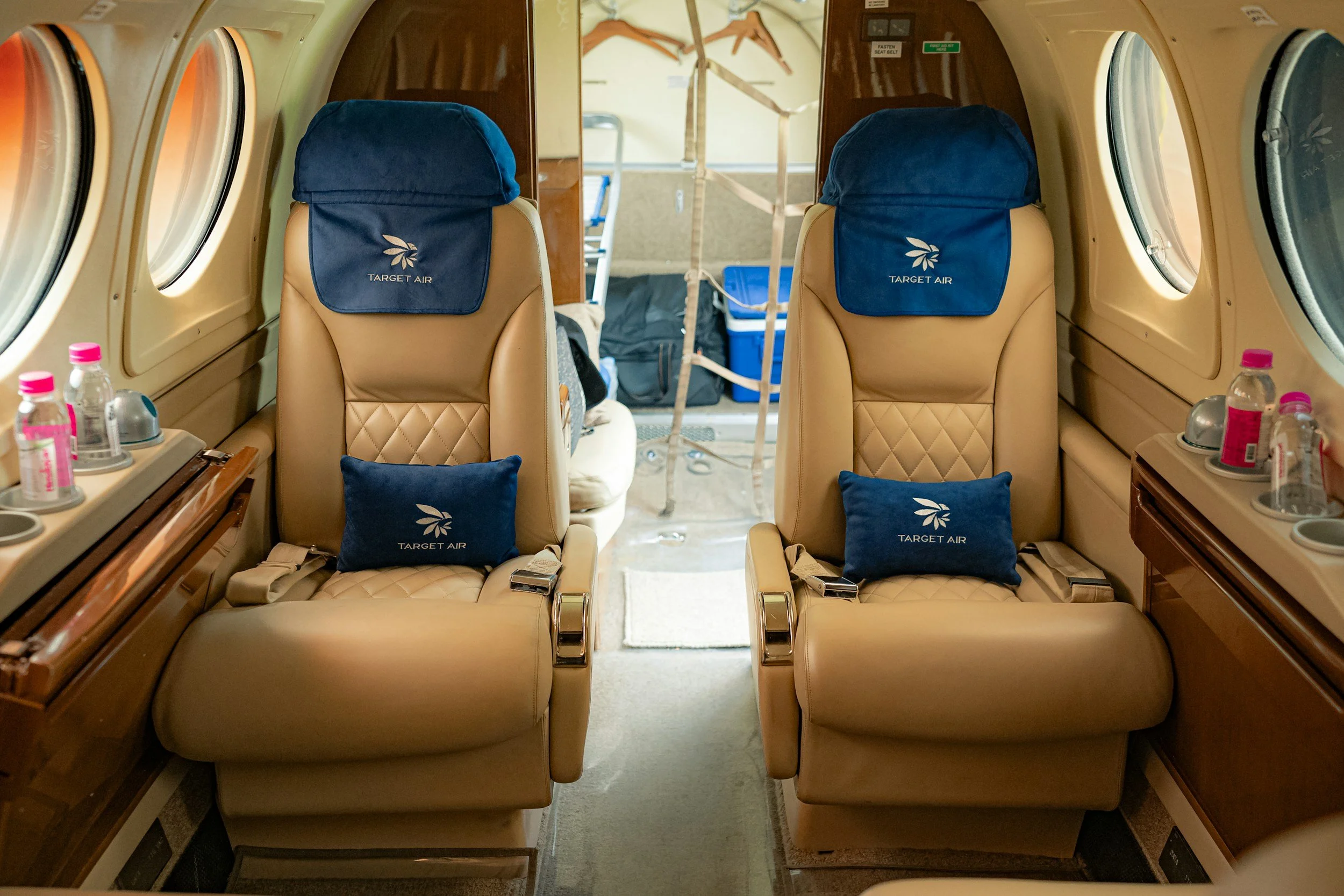
What Separates Private Jets From First Class?
Commercial first class still operates inside the airline system.
Private aviation operates outside of it.
That changes nearly every part of your journey.
A first class passenger flying with Emirates or Singapore Airlines may enjoy an exceptional onboard suite, premium dining, and chauffeur services. Yet you still travel on the airline’s schedule, use a major airport, and share the experience with hundreds of other passengers.
Private jet travel works differently.
Instead of adapting to the airline, the aircraft adapts to you.
Here’s the practical difference:
| Feature | First Class | Private Jet |
|---|---|---|
| Departure Times | Fixed airline schedule | Fully flexible |
| Airport Access | Commercial terminals | Private FBO terminals |
| Security | Standard airport screening | Fast-track private screening |
| Privacy | Shared cabin | Entire aircraft |
| Boarding Time | 45–90 minutes early | Often 15–20 minutes |
| Airports Available | Major airports only | Thousands of airports |
| Catering | Airline menu | Fully customised |
| Productivity | Limited privacy | Full business privacy |
Another major difference involves airport infrastructure.
Private travellers typically use Fixed Base Operators (FBOs), not crowded airline terminals. That means:
No long security queues
No boarding gates
No baggage carousel waits
No public lounges
No crowded check-in halls
You simply arrive, board, and depart.
That operational simplicity is one of the biggest reasons ultra-high-net-worth travellers continue choosing private aviation over commercial first class.
Private Jet vs First Class Cost Comparison
This is where most people misunderstand private aviation.
A single first class seat is usually cheaper than chartering an aircraft.
That part is true.
The more useful comparison is total value per traveller and total efficiency per trip.
In 2026, average international first class ticket prices often range between:
London to Dubai: £4,000–£9,000
London to New York: £6,000–£15,000
London to Singapore: £7,000–£16,000
Meanwhile, private jet charter pricing generally looks like this:
| Aircraft Type | Typical Hourly Rate |
|---|---|
| Light Jet | £2,000–£4,000 |
| Midsize Jet | £4,000–£6,500 |
| Heavy Jet | £7,000–£12,000 |
| Ultra Long Range Jet | £10,000–£16,000+ |
Now consider group travel.
A family of six booking long-haul first class seats may spend £60,000 or more on a return journey during peak season.
At that level, private aviation starts becoming surprisingly competitive.
This becomes even more relevant for:
Corporate leadership teams
Multi-generational family travel
Sports groups
Last-minute holiday travel
Multi-city itineraries
Many travellers also overlook the hidden cost of commercial flying:
Overnight airport hotels
Missed meetings
Delays
Reduced productivity
Lost personal time
Those costs compound quickly.
The Time-Saving Advantage of Private Aviation
This is where private jets genuinely separate themselves from commercial travel.
Time savings often matter more than onboard luxury.
A typical commercial international journey might involve:
Leaving home 4 hours before departure
Traffic to a major airport
Security queues
Immigration
Boarding delays
Baggage claim
Long airport transfers after landing
Private aviation removes most of that friction.
In many cases, you can:
Arrive 20 minutes before departure
Drive directly to the aircraft
Use smaller airports closer to your destination
Depart immediately after landing
For example, a private flight into Ibiza may use a far more convenient arrival process than a commercial passenger arriving through busy summer terminals.
That difference becomes substantial over multiple trips per year.
A 2026 industry estimate suggests private aviation can reduce total travel time by up to 50% on short and medium-haul journeys once airport processes are included.
One detail matters especially for executives.
Your schedule stays flexible.
Commercial airlines dictate departure windows.
Private jets allow last-minute changes.
That flexibility becomes invaluable when meetings shift, events overrun, or family plans evolve unexpectedly.
Comfort and Luxury Differences
Modern first class cabins are excellent.
Some are genuinely impressive.
Airlines like Emirates, Lufthansa, and Air France continue investing heavily in premium cabins.
Even so, commercial first class still has limitations.
You remain inside a shared airline environment.
Private aviation gives you complete control over the cabin experience.
That includes:
Your own passenger list
Custom catering
Flexible departure timing
Pet-friendly travel
Cabin privacy
Bespoke onboard service
Certain aircraft also include:
Full beds
Shower facilities
Dedicated meeting spaces
Ultra-fast WiFi
Cabin zoning for work and rest
For many travellers, the biggest luxury is actually silence and privacy.
No announcements.
No crowds.
No strangers nearby.
No waiting for boarding groups.
Families especially value this experience.
Children can sleep properly, move comfortably, and maintain normal routines far more easily than on commercial flights.
Privacy, Security, and Flexibility
Privacy is one of the biggest reasons affluent travellers move into private aviation.
That applies especially to:
Celebrities
CEOs
Family offices
High-profile individuals
Professional athletes
Commercial first class still exposes you to public terminals, crowded lounges, and unpredictable passenger environments.
Private aviation reduces that exposure significantly.
Security also becomes more controlled because passenger access is tightly managed.
Many travellers additionally assume commercial airlines are automatically safer.
The reality is more nuanced.
High-quality private operators maintain rigorous maintenance and pilot standards, especially under oversight from authorities like the Federal Aviation Administration and the European Union Aviation Safety Agency.
Operator quality matters far more than simplistic “private vs commercial” assumptions.
When Flying Private Actually Makes Sense
Private aviation is not necessary for every trip.
Sometimes first class remains the smarter option.
Commercial first class works well when:
You are travelling solo
The airline offers a strong premium product
Your route is direct
Timing flexibility is not important
You want to maximise loyalty points
Private jets become more compelling when:
You travel in groups
Time matters intensely
Privacy is essential
Multiple destinations are involved
You need schedule control
You want access to remote destinations
That is why many experienced luxury travellers use both.
They choose private aviation selectively where the operational advantage is strongest.
For example:
Long-haul scheduled routes → first class may work well
Mediterranean summer hopping → private aviation often wins
Family ski holidays → private jets become highly practical
Corporate roadshows → private aviation dramatically improves efficiency
Final Verdict
First class gives you luxury inside commercial aviation.
Private jets give you control over the entire journey.
That difference becomes obvious once you experience both repeatedly.
Many affluent travellers eventually realise the real value of private aviation is not champagne or leather seating. It is time, privacy, flexibility, and simplicity.
Those advantages become increasingly important as schedules grow more demanding.
If you want bespoke private aviation solutions, luxury charter planning, or tailored aircraft recommendations for your next journey, visit Private Jet Journeys for personalised service and expert guidance.
