Private Jet vs First Class to Swiss Alps: Which Is Actually Better in 2026?
You can spend £15,000 on a first class ticket to Switzerland and still stand in an immigration queue behind 200 people carrying ski bags.
That surprises many affluent travellers the first time they experience peak Alpine season properly.
On paper, commercial first class sounds exceptional. Suites, champagne, chauffeur transfers, lounge dining, priority boarding — airlines have become very good at selling aspiration. Yet the moment you land in Zurich or Geneva during ski season, the experience changes fast. Congested terminals, delayed baggage, packed transfer roads, and long onward journeys to resorts like Verbier, Zermatt, and St. Moritz can quickly erode the luxury you thought you paid for.
Private aviation solves most of those problems. However, it introduces another question entirely:
Is flying private to the Swiss Alps actually worth the enormous premium over first class?
The answer depends on how you travel, who travels with you, and what you value most.
If you're travelling solo from London for a long weekend, first class may be more than enough. On the other hand, if you're flying with family, security staff, ski equipment, or operating on a tight executive schedule, private aviation changes the entire equation.
You probably already know that wealthy travellers increasingly prioritise time over price. According to recent European business aviation reports, private jet traffic into Alpine airports during winter seasons has continued rising year-over-year, especially among family offices, founders, and ultra-high-net-worth leisure travellers.
That trend is not about status alone.
It's about efficiency.
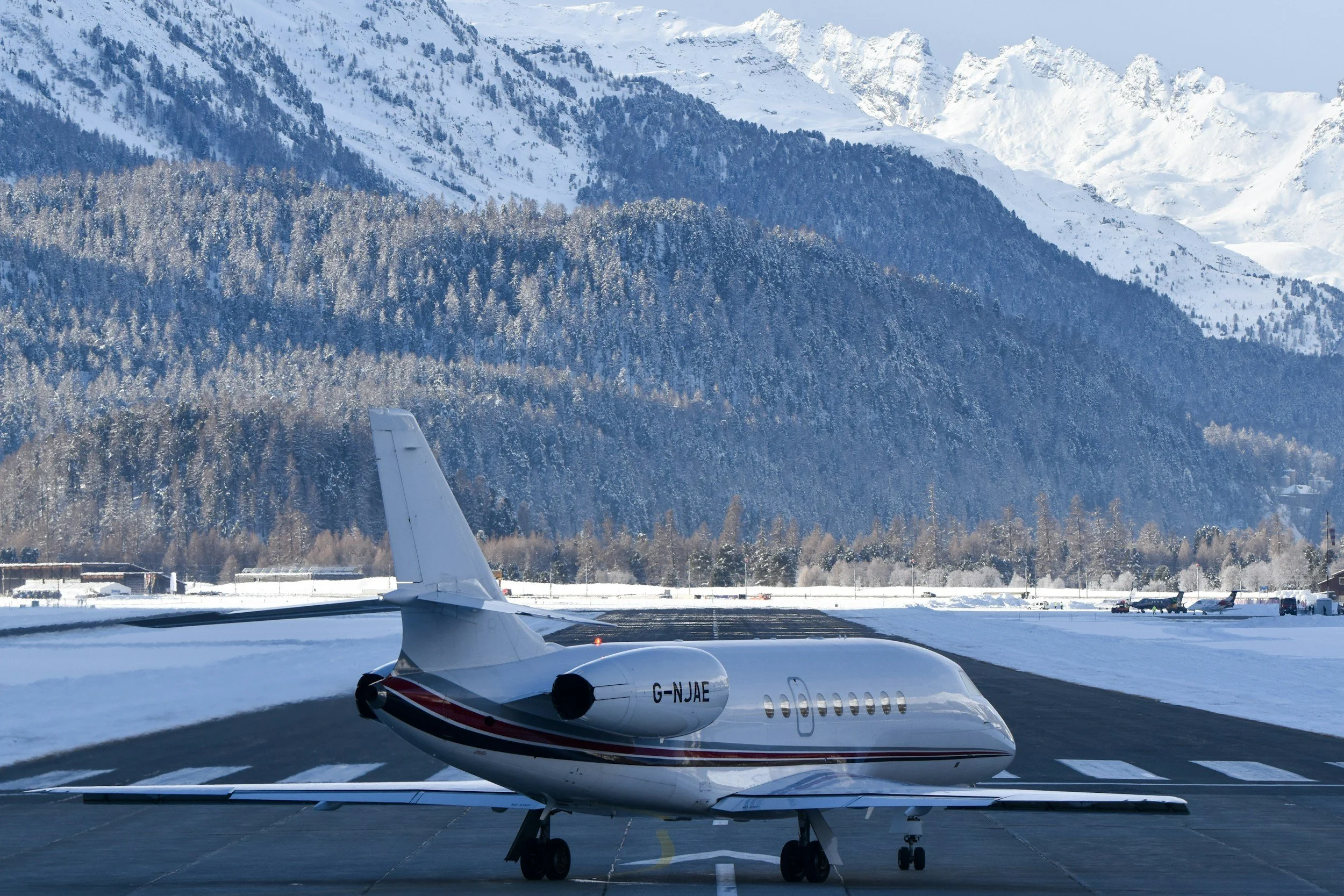
What First Class to Switzerland Actually Looks Like
Commercial first class has improved dramatically over the last decade.
If you book with carriers like Swiss International Air Lines or Emirates, you can expect:
Fully enclosed suites
Michelin-level dining
Premium lounges
Chauffeur services in some cities
Flat beds with luxury bedding
Dedicated check-in areas
Priority baggage handling
For many travellers, that experience feels more than luxurious enough.
A London-to-Zurich first class route might cost anywhere between £2,500 and £7,000 return depending on seasonality. Long-haul US routes can easily exceed £12,000–£18,000 per passenger during peak winter dates.
Still, commercial travel comes with structural limitations you cannot buy your way out of.
You still deal with:
Fixed airline schedules
Major airport congestion
Potential delays
Public terminals
Shared cabin environments
Baggage restrictions for ski equipment
Long transfers after landing
That final point matters more than most people realise.
Landing in Zurich does not mean you're in St. Moritz. Reaching Verbier from Geneva can still take over two hours by road depending on weather and traffic.
During February ski weeks, those transfer windows often become the least enjoyable part of the journey.
What Changes When You Fly Private to the Swiss Alps
The difference begins before you even leave home.
Instead of arriving three hours early at Heathrow or JFK, you typically arrive at a private terminal around 20–30 minutes before departure. Your bags go directly onboard. Security is discreet and fast. Customs procedures are dramatically simplified.
For many UHNW travellers, that alone justifies the upgrade.
Yet the real advantage appears after landing.
Private aviation gives you access to smaller airports much closer to ski resorts, including:
Sion Airport for Verbier
Engadin Airport
Geneva Airport
Zurich Airport
Some Alpine arrivals reduce total transfer time by several hours compared to commercial routing.
That becomes incredibly valuable if:
You're travelling with children
You're carrying multiple ski bags
You're moving with staff or security
You only have a short ski window
You're balancing work commitments during travel
You also control departure times.
If weather shifts or plans change, private charters can adapt far more easily than commercial airlines.
That flexibility is one reason CEOs increasingly favour private aviation during ski season.
Cost of Private Jet vs First Class to Switzerland
This is where the conversation becomes more nuanced.
If you're flying alone or as a couple, first class almost always wins financially.
A private jet from London to the Swiss Alps may cost approximately:
| Aircraft Type | Estimated One-Way Cost |
|---|---|
| Light Jet | £8,000–£14,000 |
| Midsize Jet | £14,000–£24,000 |
| Heavy Jet | £30,000+ |
Meanwhile, first class commercial tickets may range between:
£2,500–£7,000 within Europe
£10,000–£20,000 long-haul
At first glance, commercial travel appears vastly cheaper.
But group economics change quickly.
Imagine:
Two families sharing a midsize charter
Eight passengers onboard
Flexible ski luggage
Direct Alpine access
No overnight airport hotels
No lengthy transfers
Suddenly, the cost-per-seat gap narrows substantially.
That's why affluent families increasingly view private aviation as a lifestyle efficiency purchase rather than a pure luxury splurge.
You can also reduce costs through empty leg opportunities, where repositioning aircraft offer heavily discounted rates. In some cases, empty legs into Switzerland can lower pricing by 30–70%.
Ski Gear, Privacy & Family Logistics
This is the category where private aviation usually dominates.
Commercial first class may feel luxurious until you start travelling with:
Four ski cases
Young children
Nannies
Pets
Security teams
Multiple connecting transfers
Private terminals simplify everything.
Your equipment stays with you. Boarding takes minutes rather than hours. Children move freely. Pets remain calm. Privacy remains intact.
That matters more than many travellers expect.
One delayed ski bag during peak season can ruin the first two days of a mountain holiday.
Meanwhile, private aviation creates a completely different psychological experience. You travel on your own schedule rather than adapting yourself to airline operations.
Which Option Saves More Time?
You often hear private aviation described as “time-saving,” but few articles quantify what that actually means.
Here's a realistic comparison during ski season:
Commercial First Class Journey
Arrive airport: 3 hours early
Security + check-in: 45–90 mins
Boarding delays: common
Baggage collection: 20–45 mins
Ground transfer to resort: 2–4 hours
Private Jet Journey
Arrive terminal: 20–30 mins before departure
Minimal waiting
Fast customs clearance
Shorter transfer routes
Direct airport access near resorts
Total time saved can easily exceed 4–6 hours each direction.
For busy executives or short-stay travellers, that's enormous.
So, Is Private Jet Better Than First Class for the Swiss Alps?
Honestly, the answer depends on the kind of traveller you are.
First class remains excellent for:
Solo travellers
Couples
Longer stays
Travellers less concerned with privacy
People prioritising value
Private aviation becomes significantly more compelling when:
You're travelling as a group
Time matters heavily
You value discretion
You want seamless Alpine access
You carry extensive ski equipment
You dislike crowded airports
You operate on flexible schedules
For many wealthy travellers, the Swiss Alps are not just a holiday destination. They are part of a recurring lifestyle pattern. Once you experience direct private access into Alpine regions without commercial airport friction, returning to traditional airline travel can feel surprisingly inefficient.
That shift explains why demand for private charters into Europe’s ski destinations continues climbing in 2026.
Final Thoughts
You do not fly private purely because the seat is nicer.
You fly private because the entire journey changes.
The airport experience changes. The timing changes. The stress level changes. The transfer logistics change. Most importantly, your control over the day changes.
Commercial first class still delivers remarkable luxury at a far lower price point. For many travellers, it remains the smartest option financially.
Yet if your priority is efficiency, privacy, family convenience, or direct resort access, private aviation simply operates in another category altogether.
If you're planning a bespoke luxury ski trip to Switzerland and want tailored private aviation support, visit PrivateJetJourneys.com for curated charter solutions, Alpine route planning, and ultra-luxury travel experiences designed around the way you actually travel.
