Flying Private With a Dog: UK to Europe, USA and Caribbean Rules Explained
You obviously love your dog — that's why you're searching "flying private with a dog." The thought of your dog being stuck in an aircraft's cargo hold for hours, cold, alone, and frightened, is not something you're willing to risk. And you shouldn't have to.
Here's what most people don't realise until it's too late: even private aviation has strict rules you cannot skip. Miss one step, and your dog could be turned away at the border, held in quarantine, or worse. Get it right, though, and you'll unlock the calmest, safest way for your dog to cross continents — sitting right beside you, not trapped beneath you.
This guide walks you through everything you need — passports, approved airports, cabin setups, large-breed logistics, and country-by-country entry rules — so nothing catches you off guard.
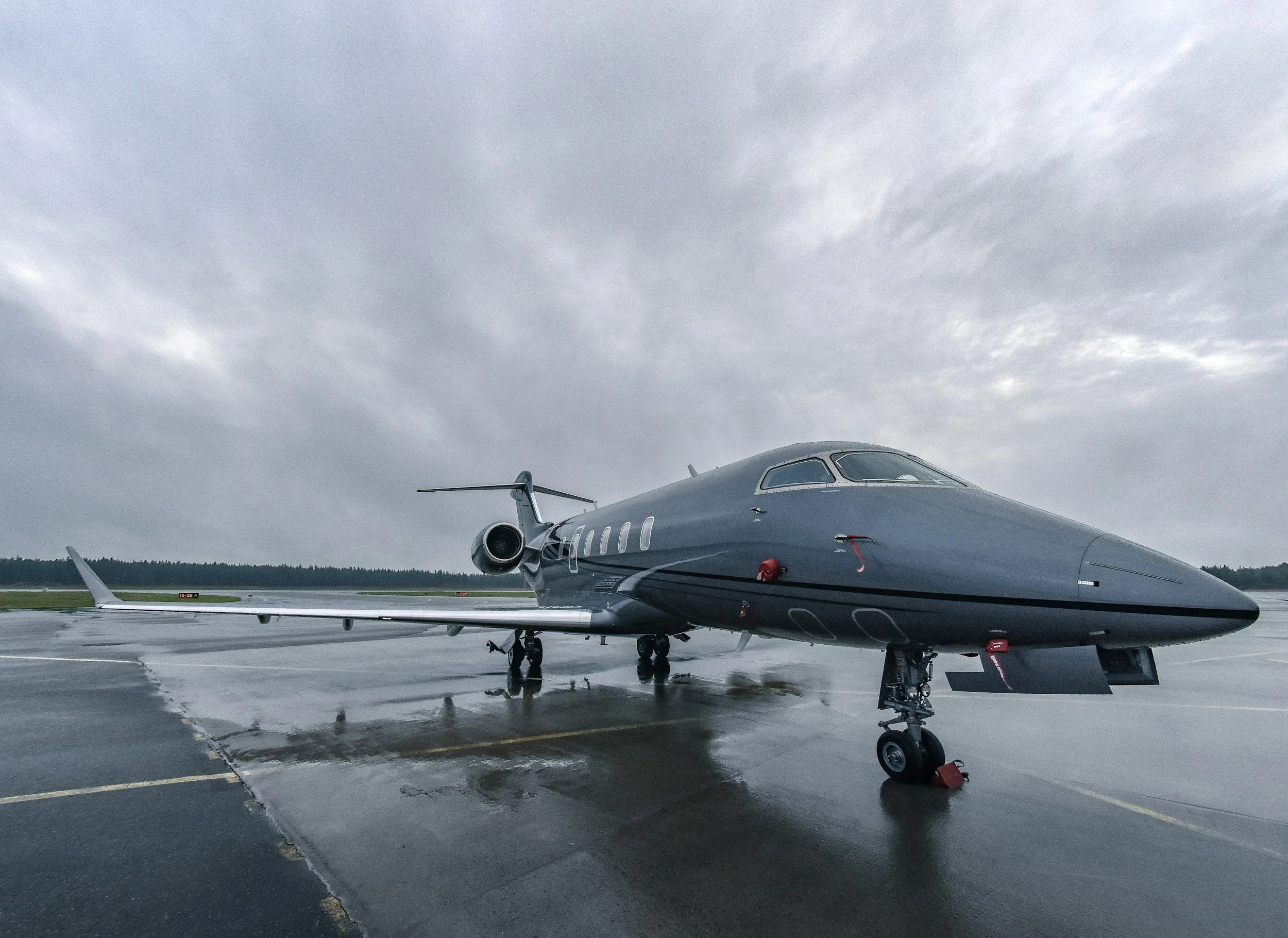
Why More Owners Are Choosing Private Jets for Their Dogs
Private pet travel has genuinely exploded. VistaJet reported that flights carrying pets rose 17% year-over-year in 2024, with London, New York, and Nice topping the list of favourite pet routes.
That growth isn't isolated to one operator. The number of animals flown on private jets has climbed 86% since 2019, partly driven by tighter US commercial rules around emotional support animals in the cabin.
You're also dealing with a commercial airline industry that's turned its back on certain breeds entirely. United Airlines now bans around 50 breeds of dogs and cats from cargo transport, citing brachycephalic and strong-jawed breed health risks. If you own a French Bulldog, Pug, Boxer, or Shih Tzu, commercial cargo simply isn't an option — and even the cabin comes with a strict weight cap most large or medium dogs can't meet.
Private aviation solves that problem cleanly. Your dog travels with you, in a pressurised, temperature-controlled cabin, with no crate mandate forcing them into a box for the whole journey.
Pet Passports and Documentation: What You Actually Need
Here's the part most brokers gloss over — and the part that trips up even seasoned travellers. Flying private does not exempt your dog from UK and international pet travel law. You still need the full paper trail, every single time.
The UK Pet Travel Scheme (PETS) Still Applies
Your dog needs to be part of the UK's official Pet Travel Scheme before it goes anywhere near an aircraft door. This isn't optional, and it isn't waived because you've chartered a Gulfstream instead of booking economy.
Step One: Microchip, Then Vaccine, Then Wait
The sequence matters, and getting it backwards means starting the clock all over again.
Microchip your dog first — it must meet ISO Standard 11784/11785, and the chip has to go in before any vaccination is recorded against it.
Rabies vaccination second — your dog must be at least 12 weeks old.
Wait 21 days after the primary rabies jab before your dog can travel into the EU — this is a hard legal minimum, not a guideline.
Step Two: The Animal Health Certificate (AHC)
Since Brexit, your dog can no longer travel on an old-style EU Pet Passport issued by a UK vet. You now need an Animal Health Certificate for each trip to the EU, issued by an Official Veterinarian. Once you're inside the EU, that same certificate covers onward travel and your return home for several months.
Step Three: Tapeworm Treatment (Dogs Only)
If your route touches Finland, Ireland, Norway, Malta, or Northern Ireland, your dog needs treatment for it. A vet must administer the treatment between 24 and 120 hours before your dog enters Great Britain, and cats are exempt from this rule. Miss that window by even a few hours in either direction, and border officials can legally refuse entry.
Flying to the USA: CDC and USDA Rules
America adds its own layer. Your dog needs a USDA-endorsed health certificate, and the CDC checks that your rabies vaccination and microchip details match exactly. The good news is that the UK is classed as a low-risk rabies country, which strips out a lot of the extra paperwork owners flying in from higher-risk nations have to deal with.
Flying to the Caribbean: Permits Matter
This is the step most guides skip entirely — and it's the one that catches owners out most often. Islands like Barbados and St. Maarten often require an import permit arranged before you fly, not on arrival. Some islands still enforce quarantine unless your dog is coming from an approved, low-risk country, so check your specific island months ahead, not the week before departure.
DEFRA-Approved Airports for Bringing Your Dog Back Into the UK
You can't just land anywhere with a dog on board. The UK requires that pets clear customs at a designated Travellers' Pet Checking Point, and you usually have to notify the operator in advance.
The main private aviation entry points include:
London Biggin Hill — well-used by charter operators, advance notice required
Farnborough Airport — one of the busiest business aviation hubs in Europe, pet clearance available with pre-booking
London Stansted (Harrods Aviation) — a long-standing option for luxury pet travel
RAF Northolt — used for private and VIP pet flights into London
Manchester Airport — private terminal option for northern England routes
Always confirm directly with your broker at the time of booking — pet clearance slots at these terminals can fill up, especially around peak summer travel weeks.
European, US, and Caribbean Terminals Worth Knowing
Once you're outside the UK, the terminal you choose still matters for how smoothly your dog clears customs.
In Europe: Paris Le Bourget, Nice Côte d'Azur, Geneva, Ibiza, and Malaga are all well-equipped for pet-friendly private arrivals, though advance notice requirements vary by airport and season.
In the US: Teterboro (TEB) near New York, Palm Beach International (PBI), and Miami Opa-Locka (OPF) are the go-to FBOs for pet owners flying private — all handle CBP and USDA inspection on-site, usually far faster than a commercial terminal.
In the Caribbean: Barbados's Grantley Adams Airport and St. Maarten's Princess Juliana (SXM) both handle private pet arrivals, but confirm your import permit is filed before wheels-up, not after.
Can Your Dog Actually Sit on the Seat?
This is usually the first question you'll ask — and the honest answer is: it depends on the operator, not the regulator.
Most private operators allow small and medium dogs to travel on a lap or seat, provided you use a proper safety harness during takeoff, landing, and turbulence. Crates aren't legally mandated the way they are in commercial cargo, but they're still smart for nervous dogs or for those critical climb and descent phases.
On longer or more luxurious charters, you can request a dedicated pet steward — cabin crew trained specifically to manage feeding, comfort, and monitoring your dog throughout the flight.
Which Aircraft Actually Work Best for Large Dogs?
Cabin size is the detail most owners underestimate until they're standing at the aircraft door with a 40kg Rottweiler and a jet built for briefcases.
| Aircraft Category | Example Models | Cabin Floor Space | Best For |
|---|---|---|---|
| Light Jet | Citation CJ3, Phenom 300 | Limited | Small dogs only |
| Midsize Jet | Citation Latitude, Learjet 75 | Moderate | Medium dogs, single large dog |
| Super-Midsize | Challenger 350, Citation Longitude | Generous | Large breeds, multiple dogs |
| Heavy Jet | Gulfstream G450/G650, Global 6000 | Extensive | Multiple large dogs, giant breeds |
If you're travelling with more than one dog, or a genuinely giant breed like a Great Dane or Mastiff, a super-midsize or heavy jet gives your dog room to lie down, turn around, and settle — not just squeeze into a gap between seats.
What Happens at Customs If Something Goes Wrong
Border staff at your arrival FBO will check your dog's microchip against the paperwork, confirm the rabies vaccination dates, and review the AHC or import permit. If everything lines up, your dog clears in minutes.
If it doesn't — an expired certificate, a missed tapeworm window, a chip that doesn't scan — your dog can be held, quarantined, or in the most serious cases, sent back on the next available flight. This is exactly why documentation deserves more attention than the flight booking itself.
What Does It Actually Cost?
Costs vary a lot depending on operator and aircraft, but here's the general shape of it. One pet travel compliance specialist told Forbes his firm regularly fields inquiries from clients willing to pay $10,000-plus for a single cabin seat, and dedicated pet operator K9 Jets currently advertises international seats starting around $8,000 to $16,000, mainly on US-Europe routes.
That's the dedicated-pet-flight end of the market. Chartering a private jet more broadly, with your dog simply along for the ride, typically adds far less to the bill, though pricing still depends heavily on aircraft size and cleaning requirements.
A few ways to bring the cost down without compromising on comfort:
Empty leg flights — repositioning flights sold at a discount, ideal if your travel dates are flexible
Fractional ownership programmes — many now build pet policies directly into membership terms, avoiding per-flight negotiation
Off-peak booking — avoiding July, August, and the December holiday surge keeps pricing more reasonable
It's worth remembering that private aviation overall is busier than it's ever been. Global private jet flights hit a record 3,878,836 in 2025, 4.6% higher than the year before, and flight segments worldwide are still running 3.9% ahead of last year's pace so far this year. Booking further ahead isn't just polite; it's increasingly necessary.
A Word on Health and Safety
Cabin pressurisation is where private aviation genuinely earns its reputation among owners of brachycephalic breeds. Cargo holds on commercial aircraft can be poorly regulated for temperature and oxygen, and the consequences have been well documented. Federal Agriculture Department data recorded 189 animal deaths on commercial flights between June 2005 and June 2011, with more than half involving brachycephalic breeds.
A pressurised private cabin removes that specific risk entirely, since your dog breathes the same air you do, at the same altitude comfort level. That said, always run any long-haul plans past your vet first, particularly for older dogs or those with existing respiratory or heart conditions.
Key Terms You'll Come Across
FBO (Fixed-Base Operator): the private terminal where your charter departs from and lands, separate from commercial terminals.
DEFRA: the UK's Department for Environment, Food and Rural Affairs, responsible for pet import and biosecurity rules.
CAA: the Civil Aviation Authority, the UK's aviation safety regulator.
AHC (Animal Health Certificate): the document replacing the EU Pet Passport for UK-issued pet travel since Brexit.
Pet Steward: dedicated cabin crew trained to manage your dog's comfort and safety throughout the flight.
Frequently Asked Questions
Can my large dog sit on the seat of a private jet?
Yes, on most operators, provided you use a proper safety harness. Policy varies by charter company, so confirm before booking.
What happens if my dog fails customs at a private FBO?
Your dog can be held, quarantined, or sent back on the next flight if documentation doesn't match or has expired. Getting the paperwork right in advance avoids this entirely.
Do I need an Animal Health Certificate if I fly private?
Yes. Private aircraft don't exempt your dog from UK or EU pet travel law — the AHC is still mandatory for EU travel.
Which UK airports are DEFRA-approved for dog entry via private jet?
Biggin Hill, Farnborough, Stansted (Harrods Aviation), RAF Northolt, and Manchester are the main private terminals with pet clearance available.
How much extra does it cost to bring a dog on a private charter?
Dedicated pet charter seats can run $8,000 to $16,000 or more on specialist routes, while adding your dog to a broader private charter typically costs far less.
Ready to Fly Private With Your Dog?
Your dog deserves better than a cargo hold, and now you know exactly what it takes to give them that. Documentation timing, the right aircraft, and the right terminal are the three things that decide whether your trip is seamless or stressful.
If you'd rather leave the compliance checking, aircraft matching, and airport coordination to people who do this every day, visit privatejetjourneys.com and let us plan a pet-friendly private charter built around your dog's needs, your route, and your timeline.
